
How to Calculate Total Return: A Quick Guide
One key concept every investor should understand is total return, as it provides a comprehensive view of your investment's performance. In this quick guide, we'll break down how to calculate total return step-by-step, explore the factors that influence it, and help you understand why it’s a vital...
- #Stocks Guide
One key concept every investor should understand is total return, as it provides a comprehensive view of your investment’s performance. In this quick guide, we’ll break down how to calculate total return step-by-step, explore the factors that influence it, and help you understand why it’s a vital component of successful investing. Whether you’re a seasoned trader or just starting out, this guide will simplify the process, making it approachable and straightforward.
Understanding Total Return
Total return is a crucial concept in the world of investing, as it provides a comprehensive view of the performance of an investment. Here’s a breakdown of what total return entails, its components, and why it matters:
What is Total Return?
Total return measures the overall gain or loss made on an investment over a specific period. It encompasses not just the price appreciation of the asset but also any income generated by it.
Components of Total Return
Total return is composed of:
- Capital Gains: This is the increase in the asset’s price over time. For example, if you buy a stock for $50 and sell it for $70, your capital gain is $20.
- Dividends or Interest Income: Many investments provide regular income payments, such as dividends from stocks or interest from bonds. This income contributes to your total return. For instance, if you earn $2 in dividends while holding the stock, this adds to your total return.
- Reinvestment: If you reinvest your dividends or interest, your total return can be even higher due to compounding effects. Reinvesting can lead to more shares or a larger principal amount, which can generate additional income.
Why is Total Return Important?
Understanding total return is essential as it enables investors to evaluate the true performance of their investments. Total return helps in comparing the performance of different assets and making informed decisions regarding portfolio adjustments.
Calculating Total Return Step-by-Step
Calculating total return is a practical skill every investor should master. It allows you to evaluate the performance of your investments effectively. Here’s a simple, step-by-step guide to help you calculate total return using clear examples and formulas.
Step 1: Identify Your Investment’s Initial Value
Begin by determining the initial value of your investment. This is the amount you paid to acquire the asset.
Example: If you bought 10 shares of a stock at $20 each, your initial investment is: Initial Value = 10 shares × $20 per share = $200
Step 2: Determine the Final Value of Your Investment
Next, find out the current or final value of your investment. This is the price at which you could sell the asset today.
Example: If the stock price rises to $30 per share, the final value is: Final Value = 10 shares × $30 per share = $300
Step 3: Calculate Any Income Generated
Add any income generated from your investment during the holding period, such as dividends or interest.
Example: If you received $2 per share in dividends over the holding period, the total dividends received would be: Dividends = 10 shares × $2 per share = $20.
Zentrix MCP
Want this wired into your own AI agent?
Zentrix MCP connects Claude, GPT, and Gemini to live market data and analysis, no copy-pasting numbers into a chat window.
Join the waitlistStep 4: Calculate Total Return
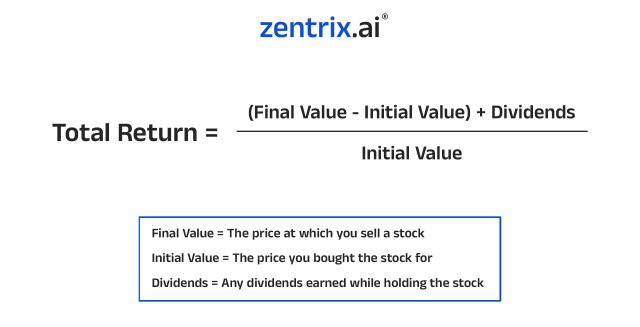
Now that you’ve identified your initial investment value, final value, and income generated, you’re ready to calculate your total return.
Total Return = [(Final Value – Initial Value) + Dividends] / Initial Value
**Example: *Our investment’s initial value was $200, while the final value was $300. We also earned $20 through dividends, meaning that our total return would be: * Total Return = [($300 – $200) + $20] / $200 = 0.60, or a 60% gain
Factors Influencing Total Return
Understanding the factors that influence total return is essential for making informed investment decisions. Here are some key elements that can affect your investment performance:
1. Market Conditions
- Bull Markets: In a rising market, asset prices tend to increase, leading to higher capital gains and potentially higher total returns.
- Bear Markets: Conversely, in a declining market, asset prices may fall, resulting in lower returns or even losses.
- Economic Indicators: Factors like inflation, interest rates, and unemployment can affect market performance and, consequently, your total return.
2. Investment Horizon
- Short-Term vs. Long-Term: The length of time you plan to hold an investment can significantly impact your total return. Longer investment horizons generally allow for more capital appreciation and the potential to recover from market dips.
- Compounding Effects: Longer holding periods allow reinvested earnings to compound, meaning your returns can grow exponentially over time.
3. Reinvestment Strategies
- Dividends Reinvestment: If you choose to reinvest dividends instead of taking them as cash, you can purchase more shares, accelerating your total return through compounding.
- Selective Selling: Deciding when to sell your investments is crucial. Selling at the right time can maximize your capital gains and enhance the total return.
Key Highlights
Understanding total return is vital for any investor looking to make informed decisions. Here’s a quick recap of the key points discussed:
- Total Return Defined: Total return measures the overall performance of an investment, including capital gains and any income generated.
- Calculation Steps: You can calculate total return by determining your investment’s initial value, final value, and any income received. This straightforward approach provides clarity on your investment performance.
- Influencing Factors: Many elements can impact total return, such as market conditions, your investment horizon, and whether you reinvest income. Each of these factors plays a significant role in the potential growth of your investments.
By keeping these concepts in mind, you can better navigate your investment journey and make choices that align with your financial goals. Remember, being informed is the first step toward success in any investment strategy.