
How to Trade VIX Stock: What to Know
The VIX, often referred to as the "Fear Gauge," is a widely recognized measure of market volatility and investor sentiment. Trading the VIX can offer unique opportunities, especially during periods of market uncertainty. However, it also comes with its own set of complexities and risks. In this g...
- #Stocks Guide
The VIX, often referred to as the “Fear Gauge,” is a widely recognized measure of market volatility and investor sentiment. Trading the VIX can offer unique opportunities, especially during periods of market uncertainty. However, it also comes with its own set of complexities and risks. In this guide, we’ll break down what the VIX is, how to trade it, and how Zentrix’s AI-driven stock signals can help you make more informed trading decisions.
What is the VIX?
The VIX, or CBOE Volatility Index, measures the market’s expectation of 30-day volatility as implied by S&P 500 index options. It is calculated by the Chicago Board Options Exchange (CBOE) and is often viewed as a gauge of investor fear or complacency. When the VIX is high, it indicates that investors expect significant market swings, while a low VIX suggests a more stable market.
Unlike stocks or bonds, the VIX doesn’t represent ownership in a company or a fixed-income investment. Instead, it’s a measure of expected volatility and is often used by traders to hedge against or speculate on market turbulence. For a more detailed explanation, you can visit Investopedia’s guide to the VIX.
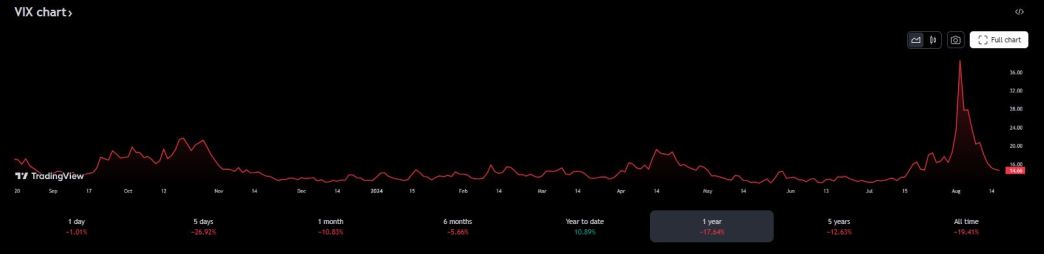
View live VIX price on TradingView
How to Trade the VIX
Trading the VIX is different from trading traditional stocks or ETFs. Here are the most common ways to trade the VIX:
1. VIX Futures
VIX futures contracts allow traders to speculate on the future value of the VIX. These contracts are traded on the CBOE Futures Exchange and provide exposure to the volatility index without directly owning it. VIX futures are often used by institutional investors to hedge against market risk. However, these contracts can be complex and are typically recommended for experienced traders.
2. VIX Options
VIX options are another popular way to trade the VIX. These options give traders the right, but not the obligation, to buy or sell VIX futures at a specified price before the option expires. VIX options are often used to hedge against significant market moves or to speculate on changes in market volatility.
3. VIX ETFs and ETNs
For traders looking for a more straightforward way to gain exposure to the VIX, exchange-traded funds (ETFs) and exchange-traded notes (ETNs) are popular choices. VIX ETFs and ETNs track VIX futures and offer an easier way to trade market volatility. Some commonly traded VIX ETFs include the ProShares VIX Short-Term Futures ETF (VIXY) and the iPath Series B S&P 500 VIX Short-Term Futures ETN (VXX). However, these instruments are subject to decay and can lose value over time, making them suitable for short-term trading rather than long-term investment.
Strategies for Trading the VIX
Given the VIX’s nature as a volatility measure, it’s important to have a clear strategy when trading it. Here are some common approaches:
1. Hedging with VIX
One of the primary uses of the VIX is as a hedging tool. Investors holding a portfolio of stocks may buy VIX options or ETFs to protect against potential market downturns. Since the VIX tends to rise when the market falls, these instruments can offset losses in a bearish market.
2. Speculating on Volatility Spikes
Traders can also use the VIX to speculate on short-term market movements. For example, if you believe the market is about to experience a sudden increase in volatility, you might buy VIX futures or options to profit from that move. This strategy is often used around major economic announcements or geopolitical events that could disrupt markets.
Zentrix MCP
Want this wired into your own AI agent?
Zentrix MCP connects Claude, GPT, and Gemini to live market data and analysis, no copy-pasting numbers into a chat window.
Join the waitlist3. Mean Reversion
The VIX is known for its mean-reverting behavior, meaning that it tends to return to its long-term average after significant spikes or drops. Traders can capitalize on this by selling the VIX after it spikes, anticipating that it will eventually decline, or by buying the VIX when it’s unusually low, expecting a rise in volatility. Understanding mean reversion can be crucial for timing your trades effectively.
Risks of Trading the VIX
While trading the VIX can be profitable, it comes with significant risks:
- Complexity: VIX derivatives like futures and options are complex financial instruments that require a deep understanding of market dynamics. They are not suitable for inexperienced traders.
- Decay in ETFs and ETNs: VIX ETFs and ETNs often suffer from decay due to the way they track VIX futures. This decay can erode the value of these instruments over time, especially in periods of low volatility.
- Market Timing: Successfully trading the VIX often requires precise market timing. Misjudging the market’s direction or the timing of volatility spikes can lead to substantial losses.
How Zentrix Can Enhance Your VIX Trading
While Zentrix specializes in stock trading signals, our platform’s AI-driven insights can be invaluable when trading the VIX as well. Understanding the overall market sentiment and stock trends can help you make better decisions about when to enter or exit VIX-related trades.
Why Use Zentrix’s Stock Signals for VIX Trading?
Zentrix provides real-time stock signals based on a combination of technical indicators, sentiment analysis, and machine learning models. These signals can offer valuable insights into market conditions, helping you anticipate changes in volatility. For instance, if Zentrix’s signals suggest a broad market downturn, it could be a timely moment to consider hedging with VIX options or ETFs.
Moreover, our Discord community offers free stock trading signals and a space to discuss trading strategies, including those related to the VIX. By joining this community, you can gain additional perspectives and support as you navigate the complexities of trading market volatility.
Putting It All Together
Trading the VIX offers unique opportunities to profit from market volatility, but it requires a solid understanding of how the VIX works, the available trading instruments, and the associated risks. By following the strategies outlined in this guide and leveraging tools like Zentrix’s AI-driven stock signals, you can improve your chances of success in this challenging but rewarding market.
Ready to enhance your trading strategy? Join Zentrix today to access real-time stock trading signals that give you the edge you need. Don’t forget to join our Discord community for free stock signals and more!