

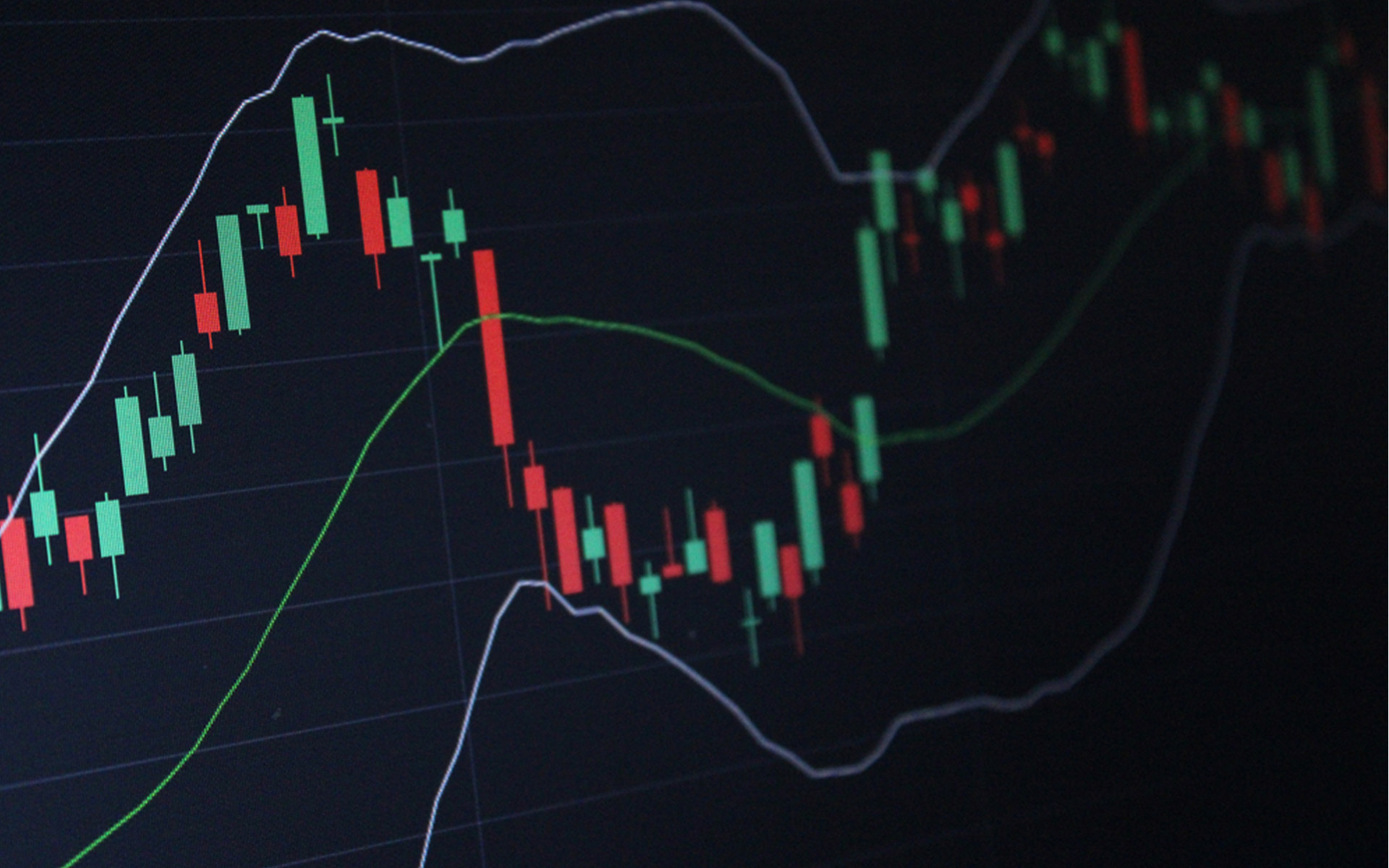
Bollinger Bands are one of the most popular technical analysis tools used by traders around the world to gauge market volatility and identify potential buy and sell opportunities. Developed in the 1980s by John Bollinger, these bands are constructed using a simple moving average (SMA) with upper and lower bands set at a fixed number of standard deviations away from that average. In this article, we’ll walk through what Bollinger Bands are, how they work, and practical strategies for using them in your trading toolkit.
Key Highlights
- What They Are: Bollinger Bands consist of a middle SMA and two bands placed above and below it, adjusted by standard deviations.
- How They Work: The bands widen when volatility increases and narrow during low volatility, which can signal potential breakouts or reversals.
- Trading Strategies: Use them to spot overbought or oversold conditions, as well as to identify trending and consolidating markets.
- Risk Management: Combine Bollinger Bands with other tools like momentum oscillators and risk-to-reward calculators for robust trade decisions.
What Are Bollinger Bands?
Bollinger Bands are designed to provide a relative definition of high and low prices. The middle band is typically a 20-period simple moving average, while the upper and lower bands are set two standard deviations away from that average. This setup means that when prices are close to the upper band, the asset may be considered overbought, and when they are near the lower band, it might be oversold.
“There is absolutely nothing about a tag of a band that in and of itself is a signal,” John Bollinger has explained, emphasizing that these bands should be used in context with other indicators.
The beauty of Bollinger Bands lies in their dynamic nature:
- Widening Bands: When market volatility increases, the bands expand.
- Narrowing Bands: When volatility is low, the bands contract—a phenomenon known as a “squeeze,” which often precedes a significant price move.

Why Use Bollinger Bands?
Bollinger Bands provide traders with an at-a-glance view of market conditions. They help you see whether prices are relatively high or low compared to recent history. For example, if a stock’s price repeatedly touches the upper band, this might signal strong upward momentum. Conversely, repeated touches on the lower band might indicate persistent selling pressure.
Moreover, these bands adapt to the market’s volatility. In periods of rapid price movement, the bands widen, giving you a clearer picture of the changing environment. This adaptability makes Bollinger Bands a favorite among both day traders and longer-term investors.
How to Use Bollinger Bands for Trading
Identifying Entry and Exit Points
One common strategy is to use Bollinger Bands to time entries and exits. Here’s how:
Overbought and Oversold Conditions:
When a stock’s price touches or slightly exceeds the upper band, it could be overbought. Conversely, a price that approaches the lower band might be oversold. However, as Bollinger himself advises, a band touch is not a standalone signal.
Tip: Look for confirmation from additional indicators like the Relative Strength Index (RSI) before deciding to sell or buy.
The Bollinger Bounce:
In many cases, prices tend to revert toward the middle band after hitting an extreme. For instance, if the price hits the lower band, it might bounce upward toward the moving average. Traders can take advantage of this “bounce” by buying near the lower band and selling once the price moves back to the middle or upper band.
Breakouts from the Squeeze:
When the bands contract into a squeeze, it suggests a period of low volatility. Since volatility is mean-reverting, a squeeze is often followed by a sharp move. Traders may enter a position when the price breaks out of the squeeze in either direction.
Risk Tip: Always set a stop loss in case the breakout turns out to be false.
Using Multiple Timeframes
Different traders use different timeframes. While many default to the 20-day period for the moving average, day traders might benefit from a shorter period (for example, 9–12 periods) to capture rapid movements. Adjusting the timeframe can help match the indicator to your trading style.
For instance, if you’re trading intraday stocks, you might set Bollinger Bands on a 5-minute or 15-minute chart rather than a daily chart.
Combining with Other Indicators
Because Bollinger Bands are based solely on price, combining them with other tools can strengthen your trading signals:
- Momentum Indicators: Tools like the RSI or MACD can help confirm if a price that’s reached an extreme is likely to reverse.
- Volume Analysis: Volume spikes can signal that a breakout from the bands is likely to be genuine.
- Risk Management Tools: Before you commit capital, use our Risk to Reward Calculator to determine if the potential gain justifies the risk.
Advanced Trading Strategies with Bollinger Bands
Once you’re comfortable with the basics, you can explore more advanced strategies:
Trend Trading
In a trending market, prices may “walk the band.” For example, in a strong uptrend, the price may hover near the upper band. In such cases, instead of selling when the price touches the upper band, you might choose to stay in the trade as long as the trend remains intact. An exit could be considered when the bands begin to flatten, indicating that the momentum is slowing down.
Reversal Trading
Sometimes, Bollinger Bands can hint at reversals. Look for chart patterns like the “double bottom” or “M-top.”
Double Bottom: After the price hits the lower band, it bounces up toward the middle, only to dip again near the lower band. This pattern can signal an upcoming reversal to the upside.
M-Top: A similar logic applies to potential downward reversals when the price repeatedly tests the upper band.
Volatility Breakouts
A Bollinger Band “squeeze” (when the bands are very narrow) often signals that a breakout is imminent. Once the price moves sharply out of this narrow range, it could be the start of a new trend. In this scenario, a trader might enter a position in the direction of the breakout, with stop losses placed just below (for long trades) or above (for short trades) the recent swing low or high.
A recent study by Business Insider reported that certain mechanical trading strategies involving Bollinger Bands have produced win ratios as high as 75% with a profit factor of around 3-to-1 in backtests. While such impressive figures shouldn’t be taken as a guarantee of future success, they highlight the potential of using well-calibrated Bollinger Band strategies in volatile markets.
Best Practices and Common Pitfalls
Use as a Complement, Not a Standalone
Remember that Bollinger Bands are best used in conjunction with other indicators. Relying solely on them can lead to false signals, especially during strong trends when prices may “walk” the bands without reversing.
Adjust Settings for Your Market
The default 20-period SMA and 2 standard deviations work well for many stocks, but different instruments and timeframes might require adjustments. For example, in a highly volatile market, you might need to widen the bands (e.g., using 2.5 standard deviations) to avoid frequent false signals.
Stay Disciplined with Risk Management
Every trade carries risk. Use tools like the Risk to Reward Calculator to set appropriate stop losses and profit targets. This discipline is crucial to prevent small losses from adding up over time.
The Bottom Line
Bollinger Bands offer a visually intuitive way to assess market volatility and make more informed trading decisions. Whether you’re looking to capture quick reversals, ride a trending market, or prepare for a breakout after a volatility squeeze, understanding how to use Bollinger Bands can significantly enhance your technical analysis. As John Bollinger himself advises, these bands are best used as a part of a comprehensive trading system rather than a single, all-encompassing indicator. Combining them with other technical tools and risk management strategies will provide you with a robust framework for your trading journey.
By continuously refining your approach and adapting your settings to suit different market conditions, you can use Bollinger Bands not only to identify potential trade opportunities but also to protect your capital. Remember, no indicator is foolproof, so always be prepared for unexpected market moves.
For more resources on technical analysis and to stay updated with the latest trading tools, visit our homepage. You can also learn from our advanced Coach Z, an AI stock analyst designed to help refine your strategies.