
Stop Orders: How to Protect Trades and Limit Losses
Every investor needs reliable tools to manage risk and optimize trade execution. One essential tool you can use is the stop order, also called stop loss orders. Whether your goal is to protect profits or limit losses, stop orders provide a way to execute trades based on predetermined price levels...
- #Stocks Guide
Every investor needs reliable tools to manage risk and optimize trade execution. One essential tool you can use is the stop order, also called stop loss orders. Whether your goal is to protect profits or limit losses, stop orders provide a way to execute trades based on predetermined price levels.
Mastering stop orders is key to protecting investments and improving trade execution. For new traders, they act as a safeguard against unpredictable price swings, while experienced investors use them to fine-tune their strategies. Without a clear understanding of how these orders function, traders may leave themselves vulnerable to unnecessary losses or miss crucial trading opportunities.
How Stop Orders Work and Why They Matter
A stop order is a trade order that is automatically executed once the stock reaches a specified price, known as the stop price. The order is converted into a market order and is executed at the next available price. This allows you to take advantage of price movements without needing to constantly monitor your stocks.
Understanding stop orders and how they compare to other order types is crucial for investing. A market order is executed immediately at the best available price, allowing for swift execution but not price certainty. A* limit order*, on the other hand, allows you to set a specific buy or sell price, guaranteeing price control but not execution if the market never reaches that level. Stop orders trigger execution only when the market reaches a designated stop price.
Types of Stop Orders
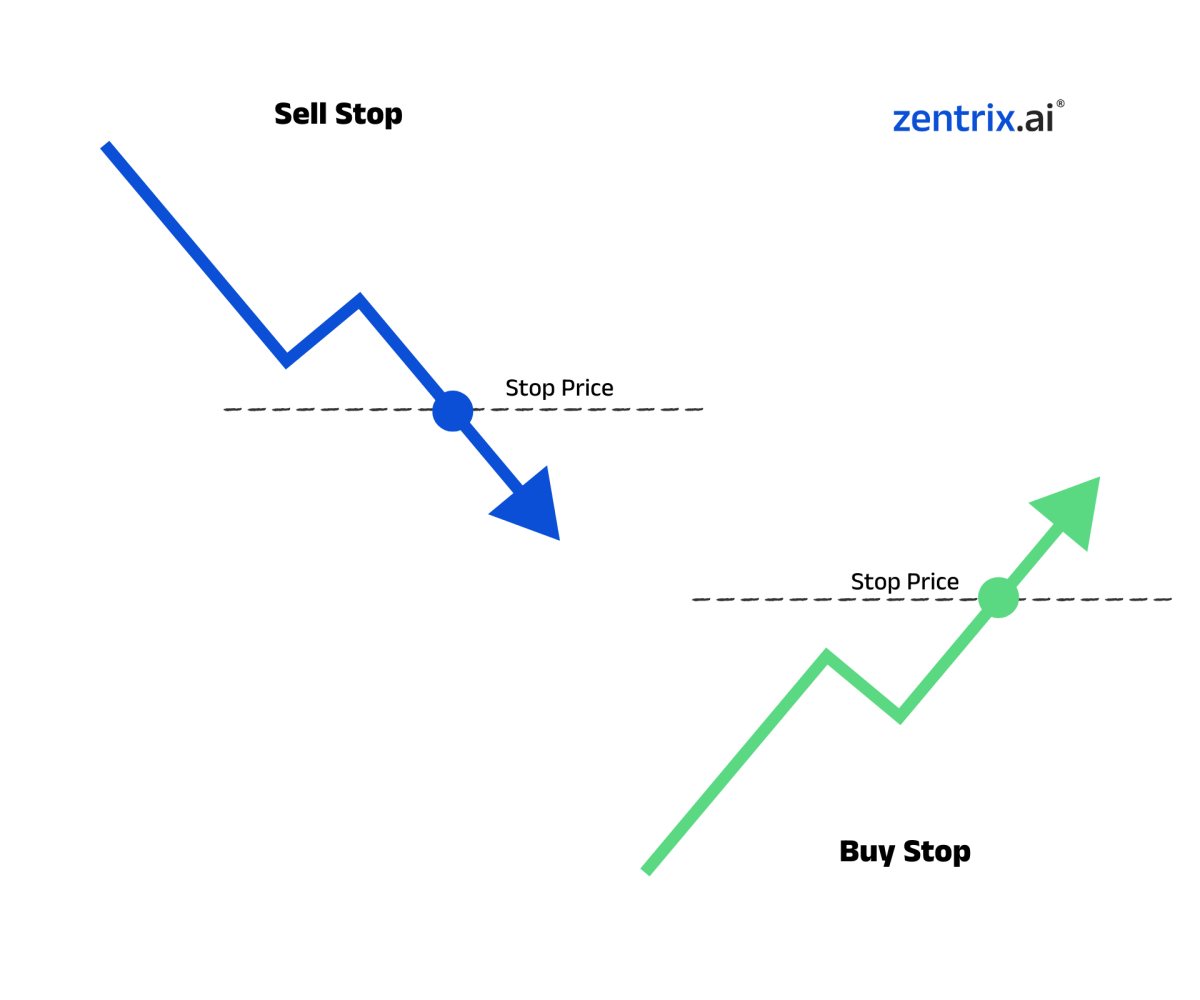
There are two main types of stop orders: sell stop orders, often called stop-loss orders, and buy stop orders. You place a sell stop order below the current market price and it can limit losses or lock in profits by triggering a sell order if the price falls to a certain level. For example, you may buy a stock at $50 and set a stop-loss at $45, the shares will be sold if the stock drops to that price, helping to prevent further losses.
A buy stop order works in the opposite direction. You place it above the current market price to enter a position once upward momentum is confirmed. This is useful for traders who want to avoid buying into a downtrend or for short sellers seeking protection against rising prices. If a stock is trading at $40 and an you set a buy stop at $45, the order will trigger once the price hits that level so that the trade is executed only after momentum has shifted upward.
Zentrix MCP
Want this wired into your own AI agent?
Zentrix MCP connects Claude, GPT, and Gemini to live market data and analysis, no copy-pasting numbers into a chat window.
Join the waitlistAdvantages, Risks, and Best Practices for Using Stop Orders
Stop orders offer a range of benefits, making them a valuable tool for investors. They automate trade execution, allowing you to protect gains and limit losses without constantly watching the market. By ensuring trades are executed at predetermined price points, they also help prevent emotionally driven decisions that could lead to poor trading outcomes. Despite their advantages, stop orders are not without risks.
“During volatile market conditions, these orders may be executed at prices significantly below the investor’s price expectations (above for buy stops), especially if the market is moving rapidly.” – RBC Wealth Management
To use stop orders effectively, you should set realistic stop prices that align with market volatility and your trading goals. Placing a stop order too close to the current price can result in premature execution due to normal price fluctuations, while setting it too far away may expose you to excessive losses. It’s important to understand a brokerage’s execution policies, as different brokers may have varying rules on how stop orders are handled, especially during extended trading hours. Make sure you regularly review and adjust stop orders based on market conditions to enhance their effectiveness.
Applying Stop Orders to Strengthen Your Trading Strategy
Stop orders are a powerful tool for both risk management and trade execution. It’s important that you use them strategically to maximize their benefits. Understanding how they fit within the broader landscape of order types and choosing the right variation based on trading goals can significantly improve your ability to navigate market fluctuations.
If you’re looking to refine your approach, platforms like Zentrix provide advanced trading signals and market sentiment analysis to help make informed decisions. By incorporating stop orders into a well-rounded strategy, you can enhance your ability to manage risk and capitalize on market opportunities.