
Ethical Investing: Aligning Your Portfolio With Your Values
Investing isn’t just about growing your wealth, it’s also about making an impact. Ethical investing, also known as socially responsible investing (SRI) or ESG (Environmental, Social, and Governance) investing, allows people to align their financial decisions with their values. That could mean avo...
- #Stocks Guide
Investing isn’t just about growing your wealth, it’s also about making an impact. Ethical investing, also known as socially responsible investing (SRI) or ESG (Environmental, Social, and Governance) investing, allows people to align their financial decisions with their values. That could mean avoiding harmful industries, supporting companies committed to sustainability, or investing in businesses that create positive change.
In this guide, we’ll break down the essentials of ethical investing, explore different strategies, and highlight how to assess a company’s ethical standing.
What Is Ethical Investing?
There are multiple approaches to ethical investing. Some investors avoid industries they find problematic, like tobacco or fossil fuels, while others actively seek out businesses leading in sustainability and labor rights. Impact investing goes a step further, directing funds toward companies or projects specifically designed to create positive change, such as clean energy initiatives or social enterprises.
Ethical investing involves choosing financial opportunities that align with moral, social, or environmental principles. While the idea dates back centuries, it has evolved into modern frameworks like ESG investing, impact investing, and corporate sustainability metrics.
Ethical investing isn’t a one size fits all approach. What’s considered “ethical” varies from person to person, it’s important to define your own priorities when investing.
Strategies for Ethical Investing & How to Assess a Company’s Ethics
Ethical investors use different methods to build their portfolios, but the core strategies generally fall into three categories: exclusionary screening, positive screening, and impact investing. Exclusionary screening, sometimes called negative screening, focuses on avoiding companies engaged in activities deemed unethical, like arms manufacturing, gambling, or deforestation. Positive screening, on the other hand, prioritizes companies excelling in ESG factors, like firms with strong carbon reduction plans. Impact investing goes even further by funding businesses that generate noticeable environmental or social benefits alongside financial returns.
But how can investors be sure a company is ethical? Many rely on independent ESG ratings from agencies like Sustainalytics, MSCI, and RepRisk, which analyze businesses based on environmental impact, social responsibility, and internal practices. These third-party assessments help cut through corporate greenwashing, where companies exaggerate or misrepresent their ethical standards. Investors can get a clearer picture by reviewing corporate sustainability reports and comparing them with independent research, media coverage, and regulatory filings.
Today, investors don’t have to rely solely on company disclosures or third-party ESG ratings. AI-powered platforms like Zentrix can provide real-time market sentiment analysis and trading signals to help investors make informed decisions. While ESG ratings and corporate disclosures provide valuable insights, ethical investing is not a passive process. Companies change and ethical standards evolve, so investors must regularly reassess their holdings so that they align with their values.
Zentrix MCP
Want this wired into your own AI agent?
Zentrix MCP connects Claude, GPT, and Gemini to live market data and analysis, no copy-pasting numbers into a chat window.
Join the waitlistESG vs. Impact Investing & The Future of Ethical Investing
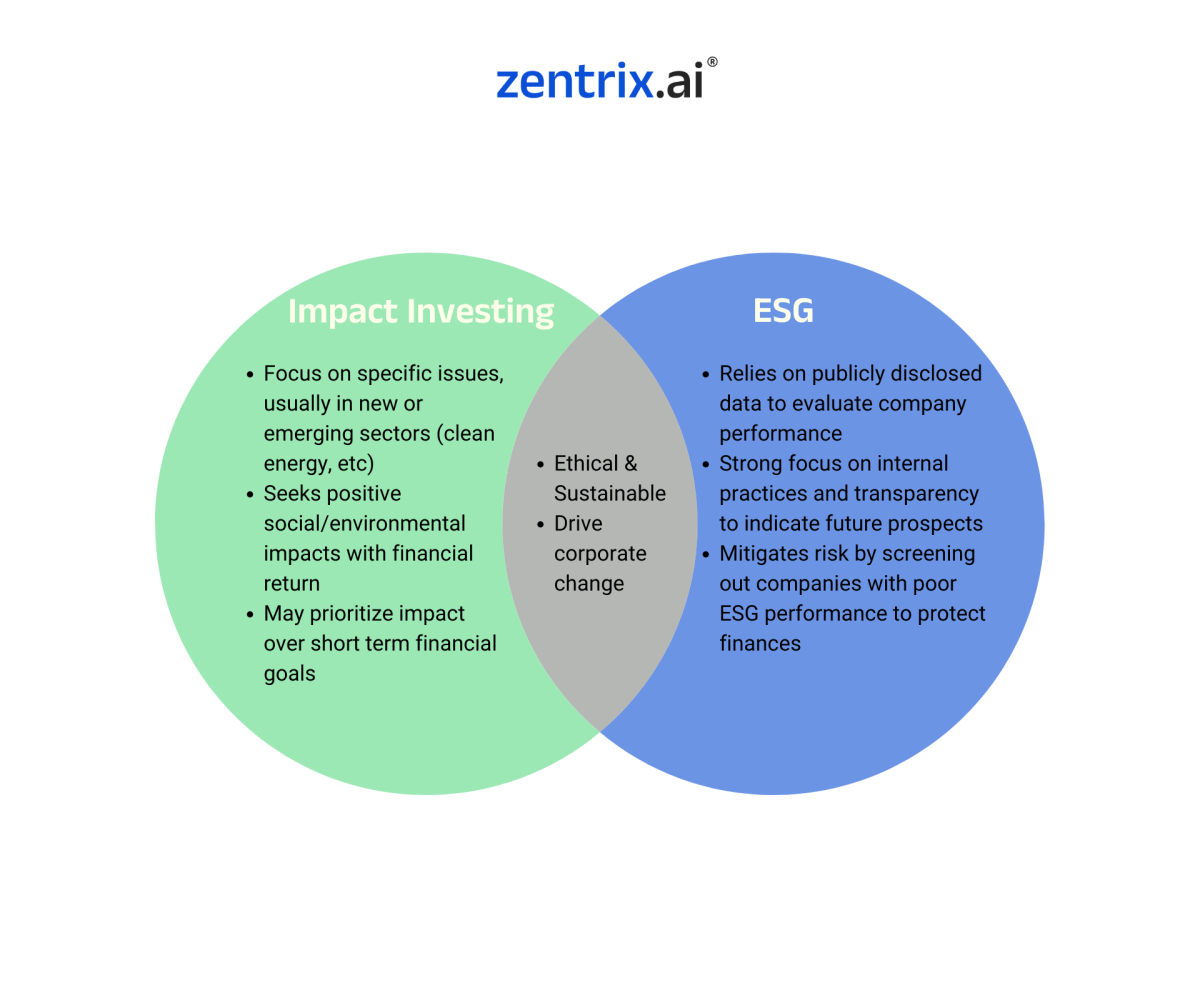
ESG investing and impact investing share common ground with key differences. ESG investing primarily serves as a risk-management tool; checking that companies are not harming society or the environment. Impact investing seeks out investments that drive positive change. An ESG-focused investor might hold shares in a traditional energy company that is improving its environmental policies. An impact investor would likely choose a renewable energy firm dedicated to replacing fossil fuels.
The world of ethical investing is changing quickly, driven by growing public awareness, regulatory developments, and a demand from investors for greater transparency. Governments worldwide are introducing stricter sustainability disclosure requirements, making it harder for companies to mislead investors with inflated claims. Meanwhile, niche ethical investment strategies like eco-investing, sustainable agriculture, and climate resilience are becoming more mainstream.
At the same time, ethical investing is still highly personal. Some investors prioritize climate action while others focus on social justice or corporate governance. As new ethical frameworks emerge and technology provides better access to reliable ESG data, investors will have more tools than ever to align their financial decisions with their values.
Next Steps: How to Get Started with Ethical Investing
If you’re interested in ethical investing, start by defining your priorities. Consider which industries you want to avoid and which you want to support. Research ESG ratings, compare companies based on their ethical practices, and stay informed about regulatory changes so that your investments align with your values.
Rather than focusing on individual stocks, many ethical investors choose ETFs or mutual funds with built-in ESG criteria which offers diversification while maintaining your values. Remember that ethical investing is a journey! Companies evolve and ethical standards shift, so reviewing your portfolio regularly is key to staying aligned with your beliefs.
Rather than always manually sorting through ESG reports and market data, investors can use AI-powered tools to streamline their research. Zentrix provides real-time trading signals, sentiment analysis, and technical insights, giving investors an edge in making informed investment decisions.
Conclusion: Profit with Purpose
Ethical investing allows you to grow your wealth while making a difference. If you’re choosing to avoid harmful industries, supporting sustainability leaders, or funding impactful projects, there are multiple ways to align your portfolio with your values. By using ESG ratings, staying informed on corporate ethics, and making conscious investment choices, you can be sure that your money is working toward a future that reflects your values.
Ethical investing is about making informed choices that align with your values. With tools like Zentrix, you can access AI-driven insights to help you trade with confidence while keeping ethical considerations in mind